
Industries · Energy
The outage window does not come twice. The checklist stayed in the truck.
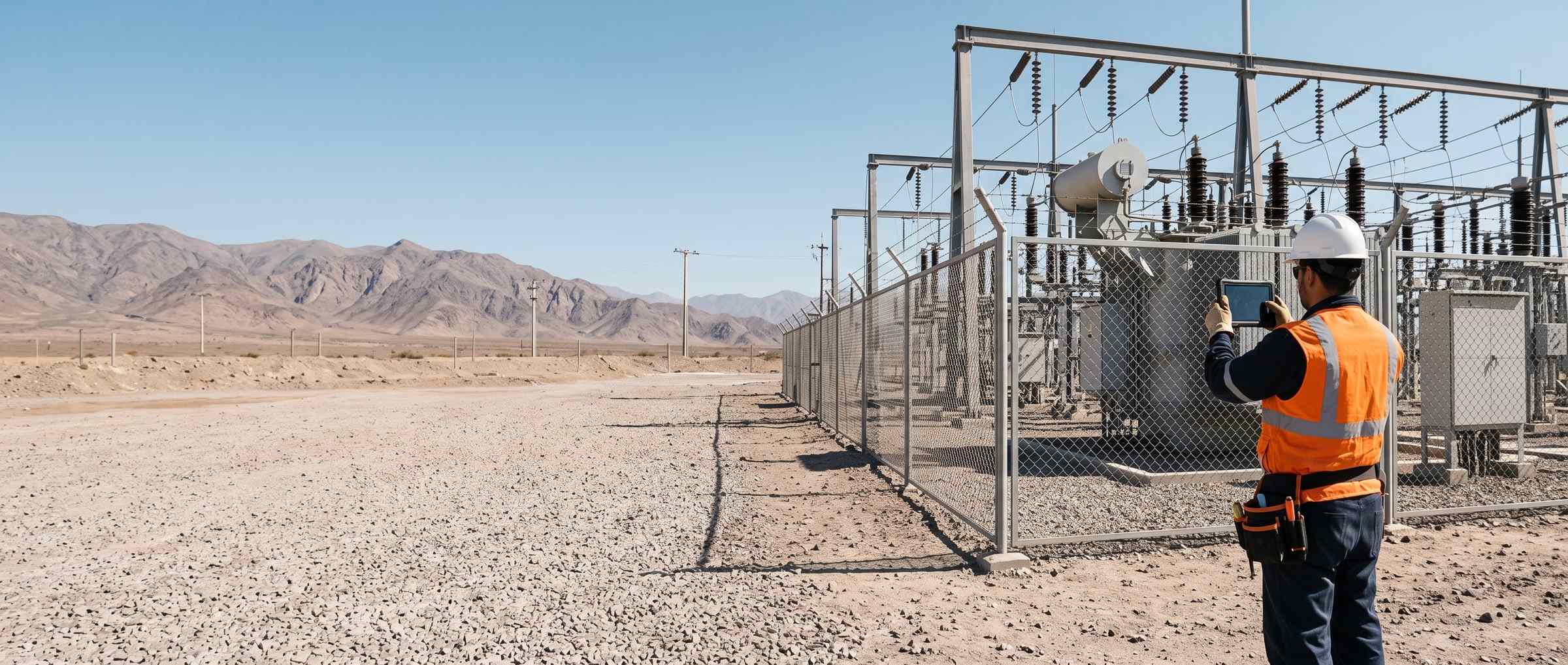
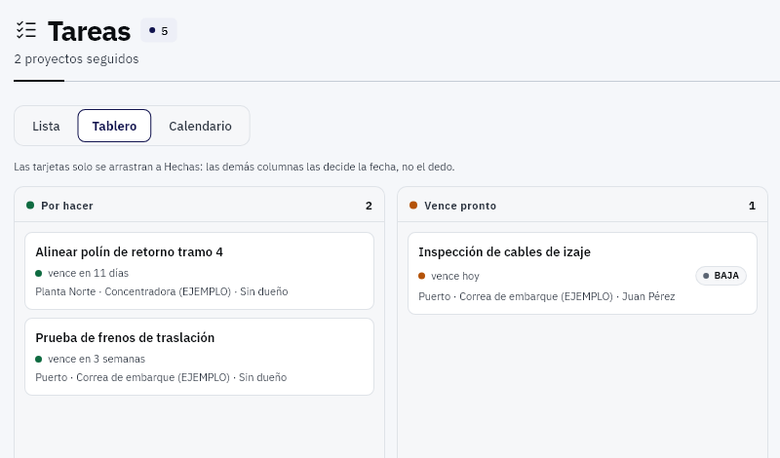
Line patrols, substation checklists, work permits with lockout and earthing, commissioning protocols and fault evidence. PAIR digitises that same checklist exactly as it is, it gets filled in the ravine with no signal, and every photo comes out with its coordinate and its time.
What happens today
- The work permit is filled by hand on the bonnet of the truck, with a ballpoint balanced on a knee, and the company copy comes back crumpled. The only time that exists is the one somebody wrote down.
- The patroller photographs the cracked insulator, but afterwards nobody knows whether the damage was on the north face or the south one, and someone has to climb back up the hill.
- In May the annual report has to be assembled by reading scans, one network folder per year and per substation, and the sheet that is missing is always the one for the intervention that matters.
Five different jobs, with the role that does them today
- 01
Structure patrol and right-of-way clearance
- Who does it today
- The transmission line inspector, structure by structure.
- What is left
- Every finding on the KMZ line route, with coordinate and accuracy in metres, and the face of the insulator as one more field on the checklist, marked up on the hill and not from memory on Monday.
- 02
Substation bay maintenance checklist
- Who does it today
- The high-voltage yard electrical technician, inside the outage window.
- What is left
- The manufacturer’s checklist digitised as it is, on the plan by levels — yard, control room, auxiliary services — and the statistics calculated on the fields, not by reading PDFs.
- 03
Work permit: lockout, absence of voltage and earthing
- Who does it today
- The switching supervisor, before touching the installation.
- What is left
- Five boxes that require a photo: visible break, padlock, tag, detector reading zero and the earth actually connected. The boxes and the photos are filled with no signal; the approval is signed with the server’s time, not the phone’s, and that is why it needs a connection.
- 04
Commissioning a solar or wind farm
- Who does it today
- The electrical inspector and the commissioning manager, protocol by protocol.
- What is left
- The five details that are always missing: start time set by the server, participants signing on the spot, observations as a form field, and the supporting photo with its location.
- 05
Field evidence of a fault
- Who does it today
- The emergency crew that goes out that same night.
- What is left
- Equipment, condition found and switching carried out with its time, and the photo never passing through a messaging app, so it arrives whole instead of squeezed to a third. The coordinate and the time are fields of the record, not metadata inside the file.
What you have to be able to show, and where it is stored
No program complies with a regulation on behalf of a power company. What a program can do is make sure the record exists, has an author, has a time, and does not have to be reconstructed in May.
| What the regulation requires | What evidence PAIR produces |
|---|---|
| DS 44/2024 arts. 72 y 73 Documentary backing and incident records Record and back up, documentarily and faithfully, all information tied to occupational risk management and keep it, preferably in electronic format, available to the relevant regulator and to the insurance administrator (art. 72). The register of incidents and dangerous occurrences records place, date and time, those involved, description, causes and corrective actions (art. 73). | The substation checklist, the work permit and the test record, each with its owner, its fill time and its arrival time on the server. Those are exactly the fields the crew fills on the night of the fault. |
| DS 76/2006 art. 5 Up-to-date register kept on site The principal company keeps on site an up-to-date register of records “on paper and/or in digital form” that includes the national ID and business name of every contractor, the risk assessment report, the visits by insurance administrators and the inspection minutes, available whenever the regulators require it. | On a farm under construction there are more contractor staff than owner staff. Records come out separated per company, with a single history for the principal, and the national ID masked according to who is looking, on export too. |
| Law 21.663 arts. 4 y 8 b) Cybersecurity Framework Act Electricity generation, transmission and distribution are essential services (art. 4). An operator of vital importance must keep a register of the actions executed that make up its management system (art. 8 b). | That register is about information security, not about the field, and it is worth saying so. What PAIR adds is the same standard on the other side of the business: every action with its author and its time, in a trail nobody using the app can alter or delete. |
| Law 19.799 arts. 3 y 5 Electronic signatures and evidential value Acts signed by electronic signature are as valid as those executed in writing on paper (art. 3). Private instruments bearing an advanced electronic signature do not prove their own date unless it is set by an electronic timestamp from an accredited provider (art. 5). | The signature is captured in the field and the approval carries the server’s time, not each phone’s clock. It is a simple electronic signature: PAIR does not call it advanced and does not offer accredited-provider timestamping. |
The bodies named are the regulators. PAIR neither represents them nor carries their endorsement.
What you start with
A few, built for the work of a Chilean power company. If the manufacturer’s checklist already exists on paper, you upload the scan and it comes out with the same letterhead and the same boxes.
- Line structure inspection checklist: insulators, fittings, earthing and signage
- Right-of-way patrol: vegetation, clearance to conductors and access condition
- Substation bay maintenance checklist, with connection thermography and breaker timing
- Transformer oil sample record and battery bank review
- Electrical work permit: lockout, tagout, verification of absence of voltage and earthing
- Control room and auxiliary services round, by plan level
- Farm commissioning protocol: string continuity and torque, inverters and trackers
- Protection and relay test record, with participants and signatures
- Field fault record: condition found, protections observed and switching with its time
Demo
Bring us your substation checklist
A maintenance checklist or a work permit you use today: in thirty minutes you will see it digitised exactly as it is, filled from a phone up on the hill, with no signal.
- Would you rather look at the plans first? See pricing.
- Still have questions? Check the FAQ.