

Industries · Ports
The ship sails anyway. The paperwork arrives on Thursday.
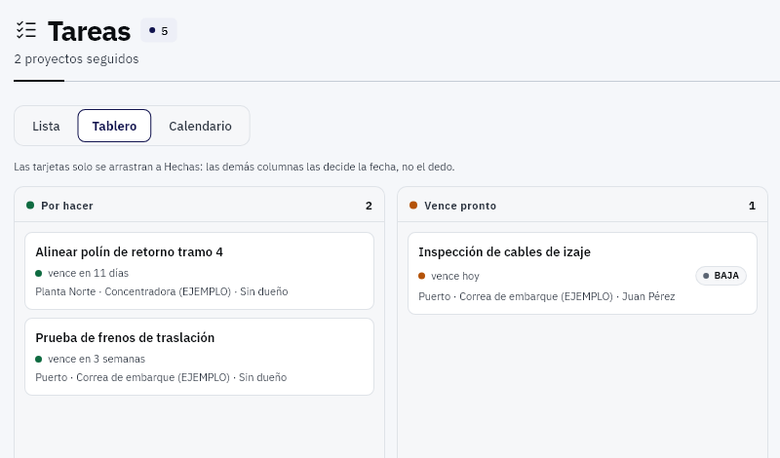
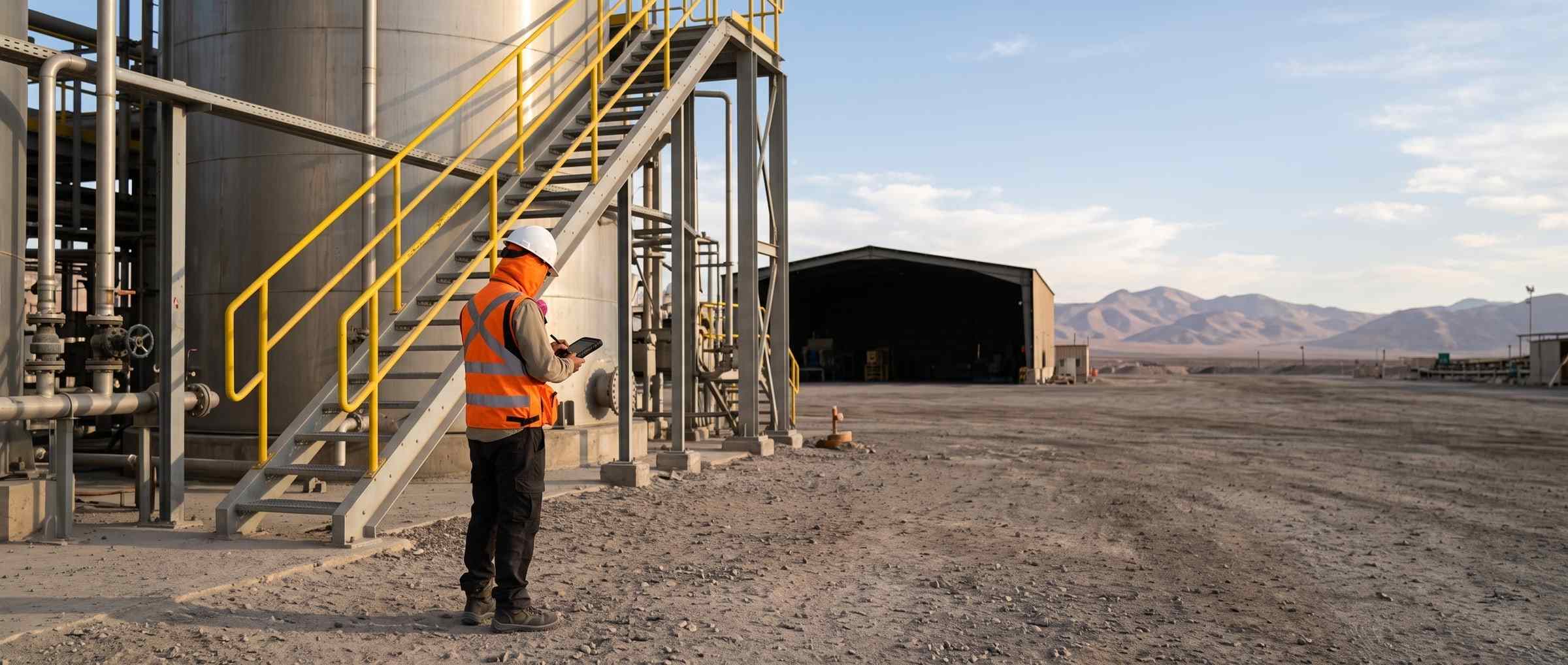
The crane pre-use check, the container damage survey, the gas measurement record and the conveyor round are filled on paper while the ship is at the wharf, and transcribed once it has sailed. PAIR digitises those same forms exactly as they are and fills them on the wharf and in the conveyor gallery, with no signal, with the coordinate and the time on every photo.
What happens today
- The pre-use check is signed in the cab, the damage survey is marked in the yard and the round is noted in the conveyor gallery. The three sheets reach the office on Friday, with the ship long gone.
- The inspection arrives and the technical inspection certificate for each unit is in three folders that do not talk to each other: the workshop, the personnel spreadsheet and the pre-use pad.
- Three weeks later the shipping line charges for the container repair, and all there is to argue with is a photo in a chat, with no time, no place and no one who took it.
Five terminal jobs, with the role that does them today
- 01
The berth, before the first line goes ashore
- Who does it today
- The wharf shift supervisor, in the window between the pilot’s notice and the mooring.
- What is left
- Every bollard, hook and fender as a point on the berth plan, and the damage photo with its coordinate and its time.
- 02
Transfer equipment pre-use check, per shift
- Who does it today
- The ship-to-shore crane or reach stacker operator, at the start of the shift.
- What is left
- The unit marked not operable on the list and on the map, with the reason written and since when, and its expiries ordered by which falls first.
- 03
The container damage survey, on receipt and on delivery
- Who does it today
- The tally clerk, at the gate and in the yard.
- What is left
- The two surveys of the same container side by side, field against field and photo against photo, each with its time and its location.
- 04
The conveyor round at the bulk terminal
- Who does it today
- The bulk supervisor, in the gallery and in the storage shed.
- What is left
- The round filled with no signal, every finding on its own level — wharf, shed or gallery — and how many times the same damaged skirt came back this month.
- 05
The berth face and the piles, once a year
- Who does it today
- The infrastructure manager, with the diving firm contracted once or twice a year.
- What is left
- Every pile, bollard and fender with its own log, and this year’s 360 walkthrough against last year’s from the same point of view.
What you have to be able to show, and where it comes from
No program shuts a crane down or certifies a piece of equipment. What a program can do is make sure the record exists, is dated, and can be shown in full on the day it is asked for.
| What the regulation requires | What evidence PAIR produces |
|---|---|
| Law 16.744 art. 66 ter Port site joint health and safety committee Constitute a Port Site Joint Health and Safety Committee when more than 25 people habitually work there. | What the committee reviews leaves a dated record, with its author and its evidence, filterable by period and by stevedoring company. |
| DS 44/2024 art. 72 Documentary backup of preventive management Record and back up occupational risk management information in documentary and faithful form, and keep it preferably in electronic format at the disposal of the regulator and the insurance administrator. | The record is born electronic on the wharf: filled with no signal, with capture time, coordinate and author, and exported by period with nothing transcribed. |
| DS 76/2006 art. 5 (d), (e) and (f) Site records register The principal company keeps on site an up-to-date register, on paper and/or digital medium, with the risk assessments, the visits of the insurance administrators and the minutes of the inspecting authorities. | The terminal sees separately what each stevedoring company and contractor recorded, and a single history of the whole site. The PDF is assembled with a connection, which is when the photographs and the signatures go in. |
| Law 16.744 art. 76 Fatal or serious accident Inform the Labour Inspectorate and the regional health authority immediately, suspend the affected operations and resume them only after inspection. | What was inspected at that spot, when, by whom and with what result, with its capture time and its coordinate. Nothing has to be reconstructed from a pad. |
The bodies named are the regulators. PAIR neither represents them nor carries their endorsement.
What you start with
A few, built for the work of a Chilean terminal. If the format the shipping line expects already exists on paper, you upload the scan and it comes out identical.
- Transfer equipment pre-use check: ship-to-shore crane, RTG, reach stacker and forklift, valid per shift
- Berth check: bollards, quick-release hooks, fenders, ladders and lighting
- Container damage survey over the six faces, on receipt and on delivery
- Gas measurement record before opening a transport unit: reading, instrument, calibration and ventilation
- Conveyor and transfer tower round: idlers, splices, skirting, scrapers and dust suppression
- Wharf infrastructure inspection: capping beam, deck, piles, fenders and bollards
- Occupational health and safety self-inspection of the port facility, subject by subject
- Start-of-shift toolbox talk with attendee signatures
Demo
Bring us your pre-use pad
A crane pre-use check or a container damage survey you use today: in thirty minutes you will see it digitised and filled from a phone, with no signal.
- Would you rather look at the plans first? See pricing.
- Still have questions? Check the FAQ.