

Solutions · Audits
An audit does not ask for the programme. It asks for the record from whatever day it picks.
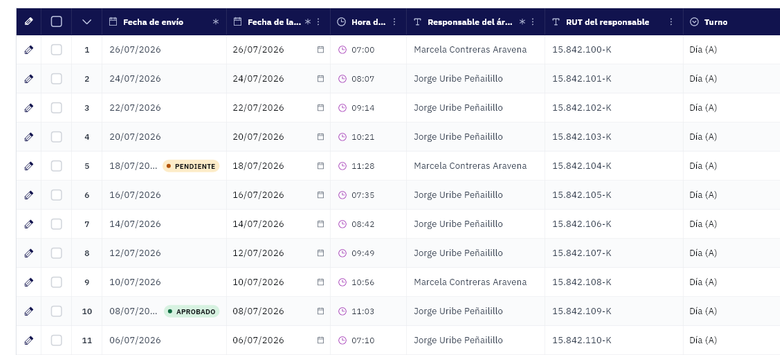
An auditor does not assess your intent: they assess whether you can show them, right there, the record from a date they choose. With the evidence spread across notebooks, emails and phones, that is half a week of work. With PAIR it is a query.
What happens the week before an audit
- A folder gets assembled against the clock, hunting for paperwork from two years ago, and the one from the exact date they asked for is always missing.
- The evidence exists but is not showable: undated photos, unsigned minutes, records where nobody knows who filled them.
- The auditor’s finding gets closed, but the proof that it was closed lives in three emails and a WhatsApp photo.
Five things that change when the auditor arrives
- 01
The record from a specific date, on the spot
- Who does it today
- The quality manager, with the auditor watching.
- What is left
- The record with its owner, its fill date and its arrival date on the server. Nothing reconstructed.
- 02
The complete series per installation
- Who does it today
- The auditor, who wants continuity and not a sample.
- What is left
- The history per item, ordered by date, exportable to spreadsheet or PDF.
- 03
The auditor’s finding, with its deadline
- Who does it today
- The owner who receives it.
- What is left
- The non-conformance with its cause, its owner, its deadline, and the dated photographic evidence of closure.
- 04
The trace of who changed what
- Who does it today
- Nobody builds it: it accumulates on its own.
- What is left
- The activity log with user, date and what changed. That is what turns a file into evidence.
- 05
The audit folder, assembled in advance
- Who does it today
- The manager, the day before instead of the week before.
- What is left
- The filter by period and scope, exported as a folder. It is not assembled: it already was.
What an auditor looks at, and under which standard
No audit accepts a declaration. It accepts a dated, attributable record that is hard to alter. That is what the system produces.
| What the regulation requires | What evidence PAIR produces |
|---|---|
| ISO 9001 cl. 7.5 Documented information Control documented information: identification, format, review, approval, change control and retention. | Every record with its form version, its approval and its activity log. Retention is defined per account. |
| ISO 45001 cl. 9.2 Internal audit Conduct internal audits at planned intervals and retain documented information as evidence of the programme and its results. | The programme as forms with expiry, and the result as a record with its owner and its date. |
| DS 44/2024 arts. 72 and 73 Record of preventive activity Keep evidence of preventive activity and of who was responsible, «preferably in electronic format». | The record comes out of the work itself, not from a separate exercise done for the audit. |
| Law 20.393 art. 4 Crime prevention model A crime prevention model needs evidence that the controls were executed, not only that they exist. | The execution of every control, with its date, its owner and its evidence, without depending on someone collecting it afterwards. |
The bodies named are the regulators. PAIR neither represents them nor carries their endorsement.
What you start with
Audit forms are usually the ones most amended by hand over the years. They get digitised as they are, amendments included.
- Internal audit checklist, by clause
- Non-conformance with cause, owner and closure deadline
- Non-conformance closure, with after evidence
- Opening and closing meeting minutes, with attendee signatures
- Corrective action plan, tracked by milestone
- Supplier or contractor audit record
- Effectiveness verification of the corrective action

Demo
Bring us your audit checklist
The one you use today, hand-written amendments included: in thirty minutes you will see it digitised as it is.
- Would you rather look at the plans first? See pricing.
- Still have questions? Check the FAQ.